Stainless Steel Australia

How To Clean Stainless Steel

I would like to buy a stainless steel appliance for my kitchen. But isn’t its beautiful surface difficult to clean?

No, stainless steels are easy to clean. For this reason, they are the normal choice of material in catering and food manufacturing industries. The smooth and non-porous surface makes it difficult for bacteria and other micro-organisms to adhere and survive.

Of course, no material is totally maintenance-free, and stainless steel is no exception to this rule. Stainless steel can be cleaned easily, leaving sanitised surfaces with a high standard of hygiene.

The excellent corrosion resistance of stainless steels used in the kitchen means that they resist attack or staining from foods like tomatoes, beetroot and capsicums, which can affect the surfaces of other materials.

How can I remove fingerprints from stainless steel?

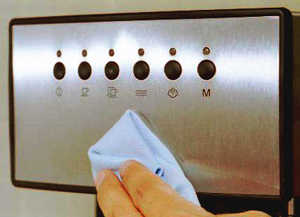
In a large majority of cases, a soft cloth or sponge soaked in soapy water will produce perfect results when cleaning fingerprints from stainless steel appliances and stainless steel surfaces. e.g. from cabinet trim and other decorative surfaces?

Another easy way of removing fingerprints from stainless steel is with a slightly damp microfibre cloth.

Stainless Steel Cleaning - fingerprintsStainless Steel Cleaning

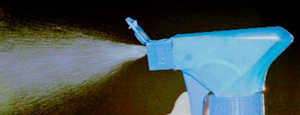
Slightly damp microfibre cloth is efficient in removing finger marks from decorative finishes mirror-polished stainless steel surfaces, chloride-free glass cleaners may perform well.

On mirror-like stainless steel surfaces, glass cleaners perform well.

Avoid abrasive products as they will leave scratches. On brushed and polished stainless steel surfaces, wipe along the polish and not across it. This will produce the best results when you clean your stainless steel appliances.

Finger marking on the surfaces of stainless steel is more of a problem on new appliances. After only a few weeks in the kitchen, fingerprints do not show up as much as when the surface was “brand new”.

How can I handle more tenacious deposits, e.g. on my kitchen sink?

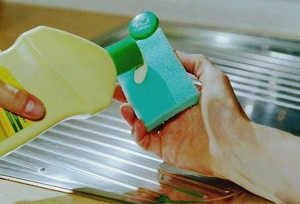
For more stubborn dirt, e.g. grease or tea stains, a normal cream cleanser (e.g. Jif) will generally do the job.

Stainless Steel Cleaning - cream cleaners

Cream cleansers are particularly suitable for stainless steel kitchen sinks. Especially in areas with hard water, wipe the surfaces dry and remove the wet cloth or sponge to avoid water marks and limescale.

Is there any way I can remove limescale from stainless steel?

If cream cleanser is not enough, treat scale with a 25% vinegar solution (acetic acid) and give it some time to dissolve. Then clean, rinse and wipe dry as usual.

What can I do about burnt-on food in pots and pans?

You can reduce the cleaning effort substantially by soaking the burnt-on deposits on stainless steel pots and pans. Simply fill the pot with hot water and a drop of dishwashing liquid and leave it for 15 minutes. After this, the deposit can generally be removed with a sponge or a nylon scouring pad without particular effort.

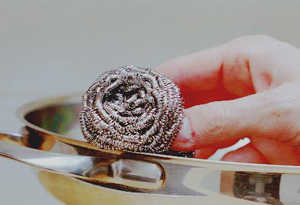
Never use non-stainless steel wool scouring pads. Ordinary steel wool pads can leave rusty stains after cleaning, which may permanently damage the corrosion resistance of the stainless steel.

scouring padssteel wool
For pots and pans, special stainless steel scouring pads are available.Never use “ordinary” steel wool!

If stainless steel wool scouring pads are used, where the deposits are very difficult to remove, then the scratches left will not damage the corrosion resistance of the surface. The scratches left however, cannot be removed by further cleaning and so this form of “aggressive” cleaning is not suitable for delicate, decorative surfaces.

Tea stains can be difficult to remove. Is there any particular recommendation?

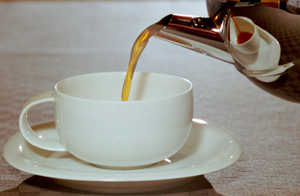
Washing soda (sodium carbonate) is very efficient in removing tea (tannin) stains from stainless steels. Tea pots can be immersed completely in a hot washing soda solution, on larger surfaces it can be applied with a cloth or sponge. Then rinse with clear water and dry as usual.

tea stainsTea stains can be removed with a solution of washing soda

Does the same procedure apply to coffee deposits?

Coffee deposits are oily, and they only occur if coffee urns are not cleaned regularly. In such a case, baking powder (sodium bicarbonate) is the answer. Mix a solution of boiling water and baking powder, allow the solution to work for 15 minutes, and then rinse and dry the stainless steel as usual.

Are there any cleaning practises that should be avoided when cleaning stainless steel

Disinfectants containing bleach (sodium hypochlorite) can damage stainless steel if concentrated or allowed to be in contact with surfaces for too long. Salt or other cleaners shown as containing chlorides can also cause damage. Look on the side of the packaging for the ingredients. Always dilute these “sanitising” products, if used, keeping the contact times to a minimum and ensuring that the surfaces are thoroughly rinsed with clean water afterwards.

Hard abrasive scouring powders (e.g. Bon Ami) will leave scratch marks.

Wire wool pads made of “ordinary” steel (e.g. Bly’s, Brillo pads) are totally unsuitable for stainless steel as they will impair the self-healing capability of the stainless steel surfaces. Fragments of steel wool breaking off the pad will rust on the stainless steel, staining the surface.

Silver dip cleaners may contain chlorides and strong acids and are not suitable for stainless steel.

There are special protective sprays and pastes for metals. What are they for?

Most spray cleansers for metallic surfaces (e.g. by 3M, Henkel) contain silicone oil. These products, often made specifically for stainless steel, can make cleaning a lot easier. However, although removing old finger marks, these sprays will not prevent new finger marks from being visible. The effect of the spray generally lasts between a few days in heavily exposed areas to several weeks. The silicone oil can be removed again completely with soapy water.

Polishing pastes produce a microscopic, but very resistant wax layer that make metallic surfaces particularly easy to clean. Being resistant to detergents, these layers may last several months. They can be removed with alcohol.

Both these treatments are used for decorative parts, not for food contact articles.

I have seen ‘stainless steel cleaner’ for pots and pans at the local hardware store

How does it work?

There are white powder stainless steel cleaners, which are applied with a clean damp cloth or sponge. They are very effective cleaners to remove contamination and will brighten the stainless steel surface slightly. They can be used with most stainless steel articles except knives – follow the instructions on the package.

Be sure to rinse the stainless steel surface thoroughly after use.


The technical advice and recommendations made in this Product Data Sheet should not be relied or acted upon without conducting your own further investigations, including corrosion exposure tests where needed. Please consult current editions of standards for design properties. Austral Wright Metals assumes no liability in connection with the information in this Product Data Sheet. Austral Wright Metals supplies a comprehensive range of stainless steels, copper alloys, nickel alloys and other high performance metals for challenging service conditions. Our engineers and metallurgists will be pleased to provide further data and applications advice.


Adrian Rhino Blog
patina copper

Copper Coating Clear Organic Finishes

Introduction to Copper Coatings

The distinctive colours of copper and copper alloys make them prized for architectural and consumer items and objects of art. Their natural metallic tones range from reddish to silvery. A number of other colours can be obtained by chemical or electrochemical processing.

Copper and its alloys are extremely resistant to corrosion, but a superficial discolouring tarnish eventually forms with exposure to the atmosphere or handling. The appearance of these metals can be preserved by applying thin clear protective coatings to their surfaces. These layer coatings are organic chemicals that harden at room temperature or with baking and are usually applied in a solvent.

There are hundreds of useful clear copper coating products on the market, formulated from numerous polymers, solvents, and additives. The user selects from these a coating based upon economics, intended life, desired transparency, and the expected service conditions. The effectiveness of a finish also depends on the procedures used when coating.

Serviceability

Coatings are available which can protect copper-base metals for many years under ideal conditions. However, handling, humidity, air pollution, sunlight, and abrasion all work to reduce the life of a coating. For example, copper coating life is usually short in exterior applications in cities with severe air pollution.

In selecting a copper coating it must be realised that maximising resistance to one type of service condition may reduce resistance to others. Also, if the life of the article is expected to be longer than any reasonably attainable coating life, a coating that can be stripped off with a solvent must be selected so that the article may be restored when the coating and appearance have degraded to an unacceptable level.

Some examples of coating performance on copper metal indicate the range of serviceability of organic finishes and their alloys:

  • Air-drying acrylic lacquers with a tarnish inhibitor (benzotriazole) have protected bronze nameplates outdoors for years. The same coating indoors on metal handrails and other objects subjected to wear could fail in less than one year.
  • A combination of a silicone primer and an acrylic top coat displayed an excellent appearance after more than six years of service in interior applications with moderate or no abrasion. The same system darkened significantly in one year of open exterior exposure but indicated good performance for more than three years in sheltered doors of office buildings and churches.
  • Silicone thermoset coatings for copper retained good protective qualities after 62 days at 93ºC.
  • Antiqued brass automotive interior trim has been protected with a thermosetting epoxy clear coating.
  • The copper roof of the Sports Palace in Mexico City is covered with an air drying acrylic lacquer formulated with an inhibitor and organic ultraviolet absorbers.
  • Bathroom fixtures of brass have been satisfactorily protected for more than five years with a baked epoxy coating.

Basic Clear Coating Systems

Nitrocellulose

Nitrocellulose coatings are the least expensive and most common air-drying coatings for interior service. They are modified with alkyd or acrylic resins. Nitrocellulose coatings are used in exterior applications; however, they are usually stripped and replaced at intervals of less than one year. They do not have high resistance to chemicals, but they are fast drying and easy to use.

Acrylic

Available as air drying or thermosetting, these are relatively high-cost materials. The air drying modifications are popular for exterior applications, while the thermosetting types are useful for interior applications requiring high resistance to heat and abrasion. Since the thermosetting coatings are not conveniently stripped, they are unsuitable for major architectural applications.

Epoxy Coatings

Epoxy coatings have excellent resistance to wear and chemicals. They are relatively expensive and are only available in thermosetting or two-part (catalyst activated) compositions with relatively short pot lives. They are good for severe indoor applications, but they degrade rapidly and darken in a few months of exterior service.

Silicone Coatings

Silicones provide the best potential for coatings which must operate at elevated temperatures. When the films of these high-cost coatings are used, protection by a second coat of a more durable abrasion resistant lacquer may be necessary. Ultraviolet absorbing compounds are added to prevent darkening of the silicone during exterior exposures.

Alkyd Coatings

Slow drying or baking is required when applying the alkyd coatings. Modifications with melamine resins, these coatings are low cost and durable enough for exterior applications. Resistance to chemicals is usually good.

Urethane Coatings

Colour degradation on exterior exposure has been a problem with urethane coatings. Resistance to chemicals and abrasion are good even for the air drying coatings.

Cellulose Acetate Butyrate

Usually used for interior applications, cellulose acetate butyrate coatings are air drying and have moderate cost and properties. They have a tendency to darken in exterior applications.

Vinyl

Vinyls are usually soft and flexible and require stabilization against ultraviolet degradation.

Additives

Among the common coating additives for copper are the following types:-

Ultraviolet Absorbers

Ultraviolet absorbers are organic compounds which are sometimes added to coatings for exterior applications in order to prevent darkening and degradation of the coating. In some cases they may also interact with the substrate and prevent tarnishing.

Levelling Agents

Levelling improve the flow properties of coatings and thereby provide better surface appearance. In addition, the likelihood of pinholing or other defects is reduced.

Chelating Agents

Benzotriazole and other chelating agents interact with copper and its alloys to prevent tarnishing. Chelating agents are preferentially absorbed on the surface of the metals and act as an invisible barrier to elements or compounds which might cause corrosion. In this way they protect the metal… against oxidants permeating through the coating and continue to protect even after a minor defect has been formed in the coating. Chelating agents may be included in the coating formulation or applied as part of a pre-treatment procedure.

Application

No coating can perform to expectations if applied to a poorly prepared copper surface. The metal surface must be free of contaminants such as dirt, oil, dust, old finishes and fingerprints. Coating should be done with a minimum of delay after cleaning the metal surface and precautions should be taken to prevent recontamination. Precautions include working in a low dust environment, handling with white gloves, and apply tarnish inhibitors (chelating agents) to the surface.

Ordinary steel wool should not be used in cleaning as the pads may contain chemicals that stain copper metals. Suitable abrasives are silicon carbide (Scotch-brite) pads or wheels, stainless steel pads, and powdered pumice stone. The pumice powder is slurried in a 5% oxalic acid solution and rubbed on with a cloth. All residues must be removed and the surface wiped dry with a clean cloth. Abrasives should not be used in polishing prior to coating, parts should be degreased or otherwise cleaned to remove any residue.

Degreasing is normally done with solvents such as butyl cellosolve and trichloroethylene. To prevent streaking and staining, it may be necessary to wipe-dry large areas with lint-free wipers. Freshly plated parts must be thoroughly neutralized and rinsed in hot water prior to coatings.

The spraying area should be free of dust and dirt and at moderate temperature (between 10 and 33ºC), at low humidity (certainly less than 80% when organic vehicles are used), and well ventilated.

Usually enough coats are applied to achieve a total dry layer thickness of 13 to 40 micrometres. Greater thicknesses tend to become obvious and the metal takes on a varnished appearance. However, the coating manufacturer may recommend thinner coatings for certain application.

Incralac

A system called Incralac developed as a result of research by the International Copper Research Association has given good performance since its release.

Intended primarily for use on outdoor architectural metal work, it preserves the natural colours of copper and its alloys for long periods. It can also be used on copper and its alloys indoors.

Incralac contains an acrylic ester resin dissolved in a solvent such as toluene. Benzotriazole is added as a corrosion inhibitor, and epoxidized soya bean oil as a levelling agent. Incralac-coated test panels exposed in many cities and towns in Australia have remained untarnished for several years.

The inhibitor effectively combats tarnishing beneath lacquer films. This mode of failure is due primarily to peroxides formed during the early stages of degradation of the lacquer film and residual solvent under the influence of ultraviolet radiation. Greatly increased protection is afforded by the incorporation of suitable ultraviolet absorbers, anti-oxidants and copper complexing agents.

Careful cleaning and spraying are essential. Wiping with an inhibitor-cleaner (40 grams benzotriazole in a 4.5 litres of water) is recommended as the last cleaning step before the coating is applied.

Incralac is available in 500 ml cans and 300g aerosol spray packs from stockists of Wattyl products, or contact Wattyl Australia Pty Ltd at 48 Walker St, Canada Bay, NSW 2046. Phone (02) 9621 9208, or visit http://www.wattyl.com.au/.

Additional Considerations

A lustrous metallic surface acts as an excellent backdrop to view coating defects and tarnished spots. Therefore the tolerance for defects is low and clear coatings must have a high degree of effectiveness in order to perform satisfactorily.

This is less of a problem on antiques or coloured metals.

Of concern on copper alloys is that darkening of the substance can occur even under a coating that is intact due to interaction of the copper with residual solvents. This is a special problem during outdoor exposures when ultraviolet radiation can stimulate the breakdown of solvents.

By proper choice of solvents and additives this problem can be minimized. Ethyl alcohol and isopropyl alcohol cause considerable tarnishing. Benzene, toluene, xylene, butyl acetate, and ethyl acetate are much better.

Discolouration of copper and its alloys also may occur at the curing temperatures normally recommended for thermoset coatings. It is wise to use low curing temperatures and short curing schedules to avoid such in-process discolouration. Catalytic activity of copper sometimes allows lower temperatures or shorter curing schedules to be used.

This Product Data Sheet is based on information provided by the Copper Development Association. Further information is available from Austral Wright Metals.


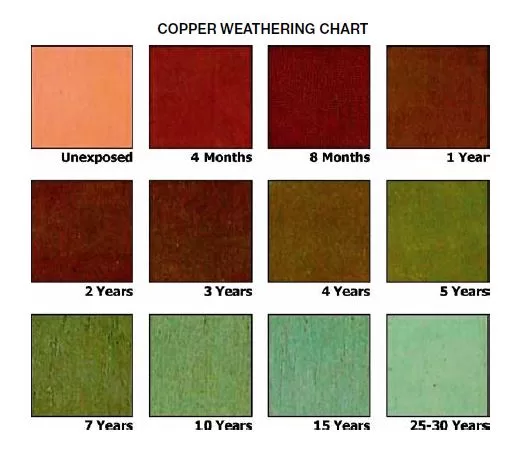
Finishes – Natural Weathering

Copper Alloys WeatheringCopper Alloys WeatheringCopper Alloys WeatheringCopper Alloys WeatheringCopper Alloys WeatheringCopper Alloys Weathering
Unexposed
4 Months
8 Months
1 year
2 Years
3 Years
Copper Alloys WeatheringCopper Alloys WeatheringCopper Alloys WeatheringCopper Alloys WeatheringCopper Alloys WeatheringCopper Alloys Weathering
4 Years
5 Years
7 Years
10 Years
15 Years
25-30 Years
The technical advice and recommendations made in this Product Data Sheet should not be relied or acted upon without conducting your own further investigations, including corrosion exposure tests where needed. Please consult current editions of standards for design properties. Austral Wright Metals assumes no liability in connection with the information in this Product Data Sheet. Austral Wright Metals supplies a comprehensive range of stainless steels, copper alloys, nickel alloys and other high performance metals for challenging service conditions. Our engineers and metallurgists will be pleased to provide further data and applications advice.


Swan_Advertising Blog
Copper-Composite-Panel

Natural Metals Composites Information

In March 2015 we introduce to you COPPER, BRASS and STAINLESS composite panels. These products use a thin skin of natural metal with a composite core to provide flatter panels and easier fabrication. This is not aluminium composite imitating copper – this is the real deal.

Swan_Advertising Blog